Asian Handworks
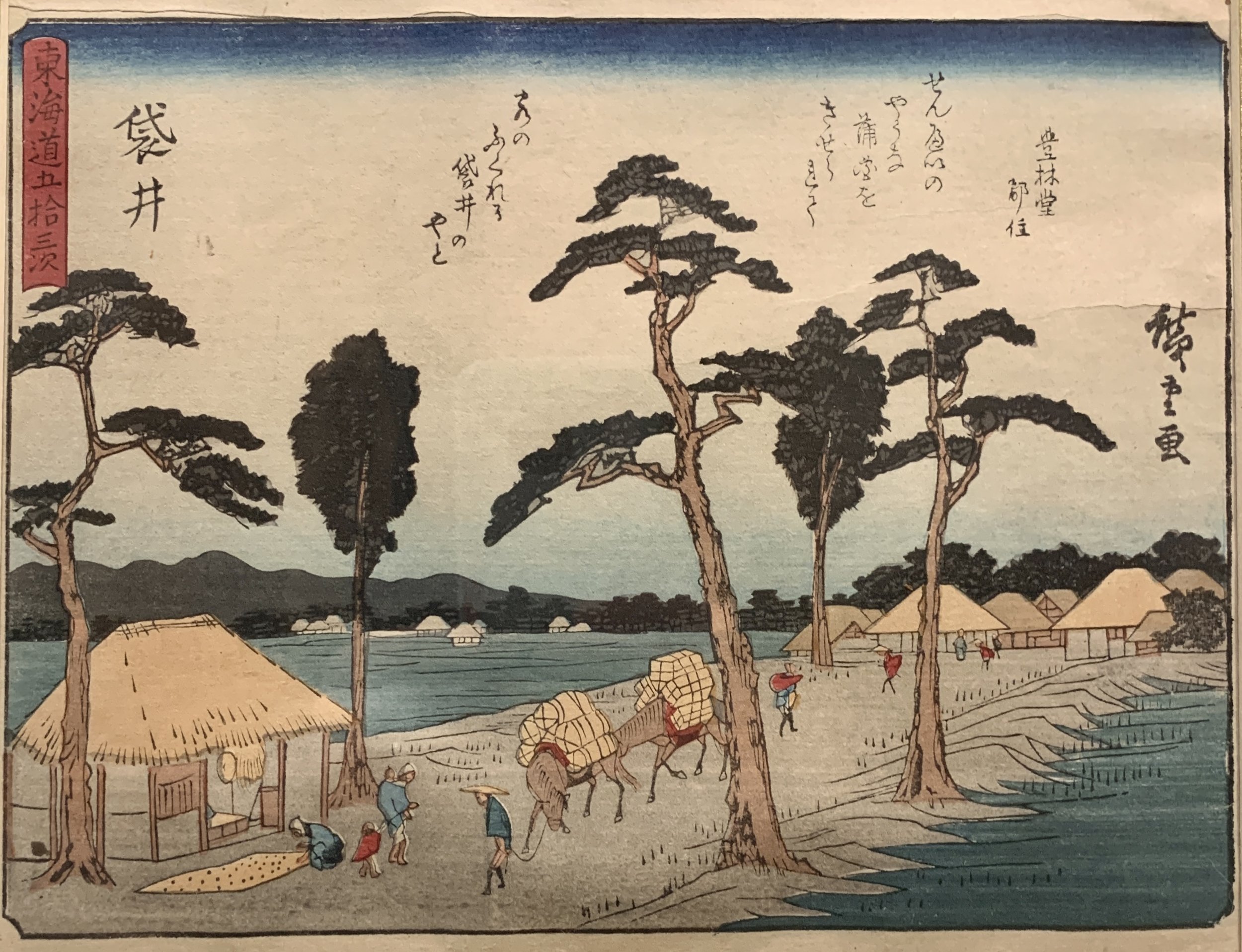
Utagawa Hiroshige (1797-1858) #28 Fukuroi (from The Fifty-Three Stations of the Tokaido Series) c. 1840
Utagawa Hiroshige (1797-1858) #28 Fukuroi (from The Fifty-Three Stations of the Tokaido Series) c. 1840
Fukuroi, Station #28 with a poem by Horindo Hinazumi
Colour woodblock (20th Century reprint), 7.75” x 9.5” (image size), framed
The Fifty-Three Stations of the Takaido (東海道五十三次, Tōkaidō Gojūsan-tsugi) is a well-known series of ukiyo-e woodcut prints by Utagawa (aka Ando) Hiroshige (1797-1858), which he created after his first travels along the Tōkaidō in 1832.
The Tōkaidō road (‘Tōkaidō’ meaning “Eastern Sea Road”), was the main transport artery of Japan’s old world, which linked shōgun's capital, Edo, to the imperial one, Kyōto, and was one of the Five Routes constructed under Tokugawa Ieyasu, in the Edo period, to strengthen central shogunate power over Japan. The Takaido had 53 different post stations, which provided stables, food and lodging for travelers.
Ukiyo-e, meaning "pictures of the floating world," is a genre of 17th-18th century Japanese art created in Japan’s Edo period that captured the urban, hedonistic lifestyle of the Edo period (1603–1867) - from fashion to theatre to popular travel attractions, and later influenced “Japonisme”; a style coined in late Impressionism in the 19th Century.
The Hōeidō edition (1833-1834) of the Tōkaidō is Hiroshige's best known work, and the best sold ever ukiyo-e Japanese prints in Japan’s history.